File 056 · 14 November 2004
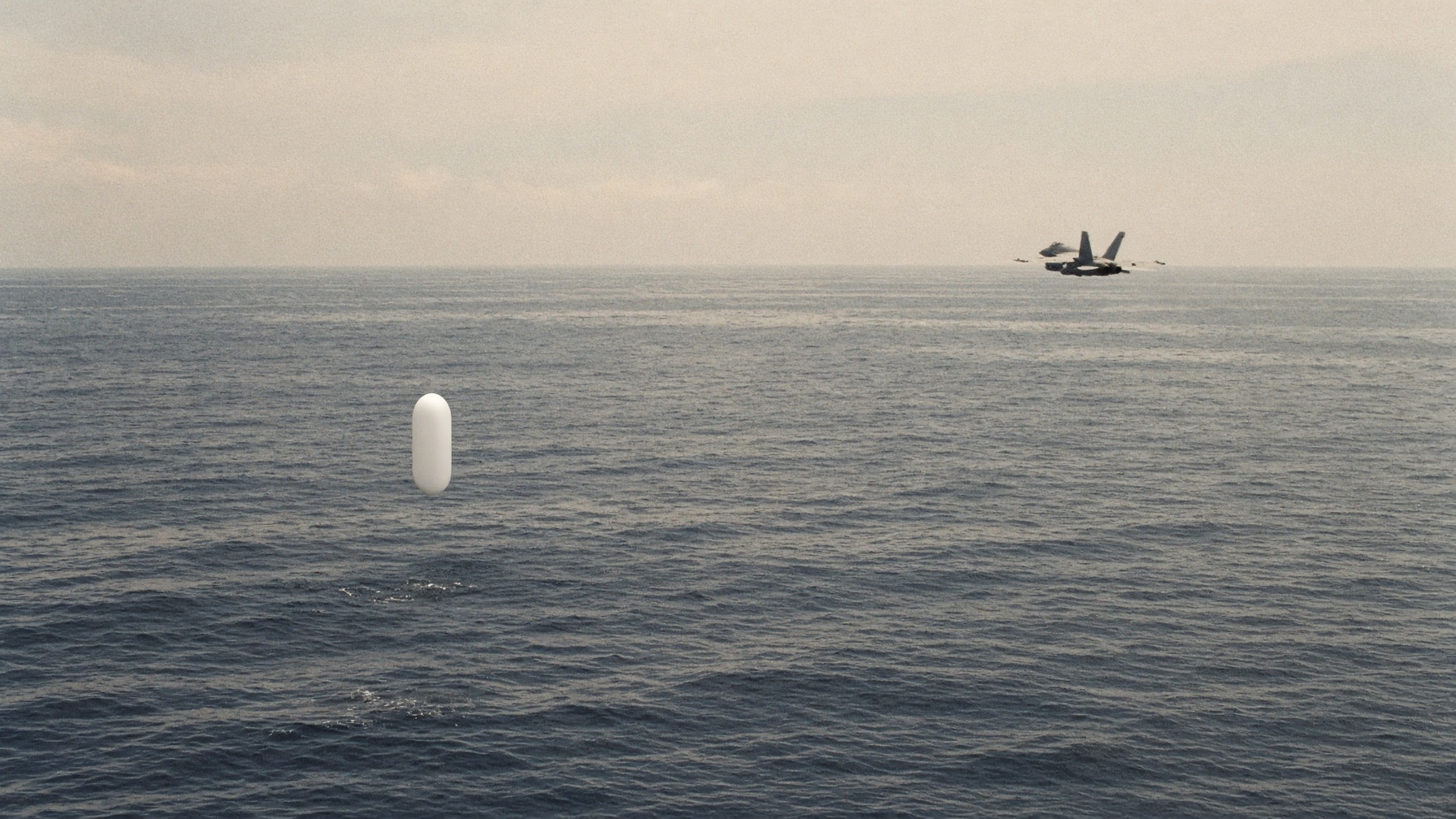
USS Nimitz tic-tac
Off San Diego, California, United States
Opened 9/4/2026
Ledger illustration of the file — not a photograph of the object. Ledger illustration of the report. Pacific training ranges off Southern California. — Night Ledger illustration of the file
Standing
Unidentified
On the public record, and still open. A claim, paper, or film — not a finding that it was ours, and not a finding that it was not.
FLIR1 — Nimitz ATFLIR, official Navy release
U.S. Navy / Department of Defense, authorized release 27 April 2020.
Original tape · original language kept
English writing · original voice kept
English radio on the Nimitz FLIR1 tape, 14 November 2004. The ATFLIR pod locks a white, tic-tac-shaped object off southern California. Callouts are range, angle, and surprise — not a name for the object. The Pentagon released the clip in 2020 and still calls it unidentified.
What was claimed
USS Princeton radar tracked objects for days. Commander Fravor and others described a white, tic-tac-shaped object that dropped, mirrored their maneuver, and left. ATFLIR later recorded a clip now called FLIR1.
What is on the record
The Pentagon confirmed the Navy video is genuine and the phenomenon remains unidentified. AARO and ODNI discuss the case as UAP, not as an extraterrestrial finding. Radar data has not been released in full public form.
For several days the USS Princeton’s SPY-1 radar had been painting unidentified objects descending from above 80,000 feet to sea level in less than a second. On 14 November, Commander David Fravor and his wingman were diverted from a training run. Fravor saw a white, 40-foot, wingless object like a tic-tac moving erratically over a disturbance in the water. When he dove on it, it accelerated and was gone. A second crew, including Lt. Commander Chad Underwood, recorded the FLIR1 video.
The Pentagon’s UAP Task Force later released that video. The 2021 preliminary UAP assessment and subsequent AARO reporting treated Nimitz as a genuine unidentified. Proposed explanations — balloons, birds, radar artifacts — do not sit easily with Fravor’s visual, the Princeton tracks, and the FLIR together.
It is the modern index case: sensors, fighter pilots, a carrier group, and a declassified tape.
Could this have been ours?
The known sky, that night.
The station was flying. Starlink was not. A string of orbs in this year is usually not a train.
1998 —
International Space Station
A bright, steady moving star. A few minutes to cross. No strobe. Occupied since 2000. NASA publishes the pass times. Not unidentified.
Always
Aircraft, balloons, meteors
Landing lights, flares, lanterns, reentries, fireballs. They are on the known sky. They do not close a file by themselves — they are what a serious look has to hold the claim against.
Orbit · Space — the desks for lights that are already named.
Sources
Paper on this file
Official or public documents that belong with this case — not a verdict.
16 December 2017
Pentagon AATIP confirmation
U.S. Department of Defense · United States
After the New York Times described a Pentagon UFO study, the Defense Department confirmed that the Advanced Aerospace Threat Identification Program had existed and that some of its work continued.
April 2019 (publicly confirmed)
U.S. Navy UAP reporting guidelines
U.S. Navy · United States
The Navy confirmed it had issued unclassified guidelines so aircrew could report unidentified aerial phenomena without stigma. It did not identify the objects as non-human.
27 April 2020
Pentagon UAP video release
U.S. Department of Defense · United States
The Pentagon authenticated three Navy infrared videos — FLIR, GIMBAL, and GoFast — as real UAP recordings, already in circulation.
June 2021
Preliminary Assessment: Unidentified Aerial Phenomena
Office of the Director of National Intelligence (ODNI) · United States
Preliminary assessment submitted to Congress on UAP reported by U.S. government sources, primarily military aviators, between 2004 and 2021. It evaluates potential explanations and national security implications without addressing historical crash or occupant claims.

July 2023
UAP Disclosure Act (proposed)
U.S. Congress · United States
Senators Schumer and Rounds introduced statutory language for a UAP records collection at the National Archives and a review board — later stripped back in the NDAA.

July 26, 2023
Unidentified Anomalous Phenomena: Implications on National Security, Public Safety, and Government Transparency
House Oversight Committee, Subcommittee on National Security, the Border, and Foreign Affairs · United States
Congressional hearing featuring testimony from military aviators and a former intelligence official on UAP encounters, government transparency, and claims of withheld information regarding non-human intelligence and crash retrieval programs.
8 March 2024
AARO Historical Record Report, Volume I
All-domain Anomaly Resolution Office · United States
AARO’s historical review found no evidence that the U.S. government has confirmed extraterrestrial technology, and traced many secret-program stories to real classified aerospace work.
Related files
Same craft, same place, same years. A neighbor in the catalogue — not a conclusion.

Same craft · Nearby · Same year · November 14, 2004
Nimitz FLIR / Tic Tac
Off the coast of San Diego · United States
Unidentified
U.S. Navy F/A-18 Super Hornet ATFLIR sensor footage of an unidentified oblong object during training exercises with the USS Nimitz carrier strike group. The object was reported by multiple pilots and radar systems prior to the infrared recording.

Same place · 15 July 2019
USS Omaha sphere
Off San Diego, California · United States
Unidentified
The USS Omaha filmed a spherical object that appeared to enter the ocean. No wreckage was found. The footage reached the public in 2021.