2026-09-18 · next
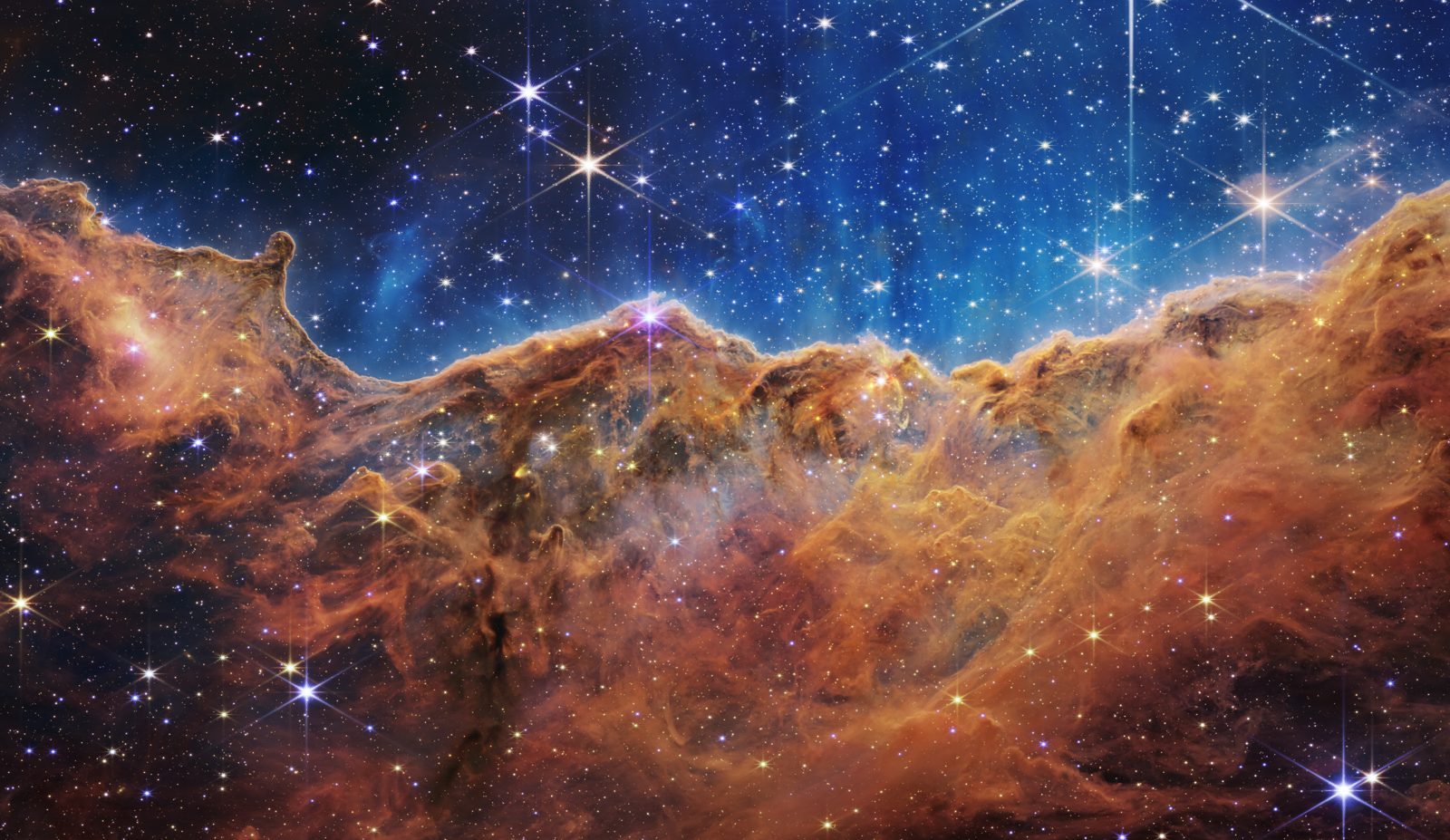
Venus at peak evening brilliance
Low in the west after sunset. First quarter Moon the same night. NASA / JPL What’s Up.
Space · pictures · film · the research
The Moon we walked. Mars we drive. Telescopes that photographed galaxies as they were more than thirteen billion years ago. Search it. Sweep NASA for more. Tap a picture to open it.
8 films · 65 pictures · 15 papers
This month · the known sky
NASA / JPL What’s Up, September 2026. The station’s live cameras sit on Orbit. Times for a pass over your town are NASA’s, not ours.
2026-09-18 · next
Low in the west after sunset. First quarter Moon the same night. NASA / JPL What’s Up.
2026-09-22 · next
Fall in the north, spring in the south. Day and night share the clock, once.
2026-09-26 · next
Full Moon rises near Saturn. Neptune is in the same wide triangle — binoculars. Saturn is naked-eye.
Whenever it passes
A bright, steady moving star. NASA publishes times for your town. Live cameras sit on Orbit.
2026-09-10 · passed
Dark skies. The Teapot and the Milky Way’s center are easier in the south after dusk.
2026-09-14 · passed
14–20 September. Use the Moon as a pointer. Dark sites may show the galaxy’s center.
Hubble · Webb · the same object
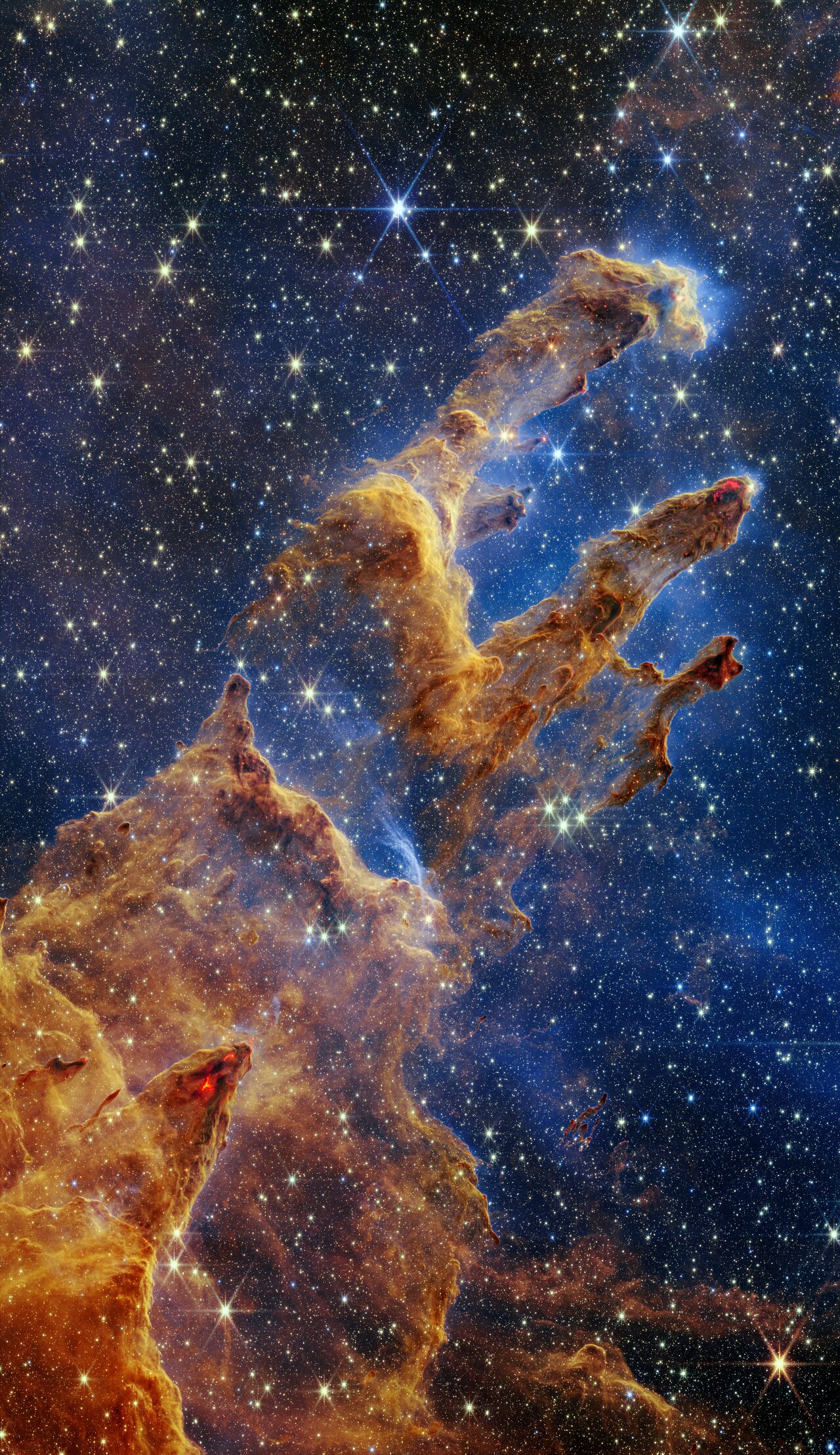
Eagle Nebula. Same clouds. Infrared sees through the dust.
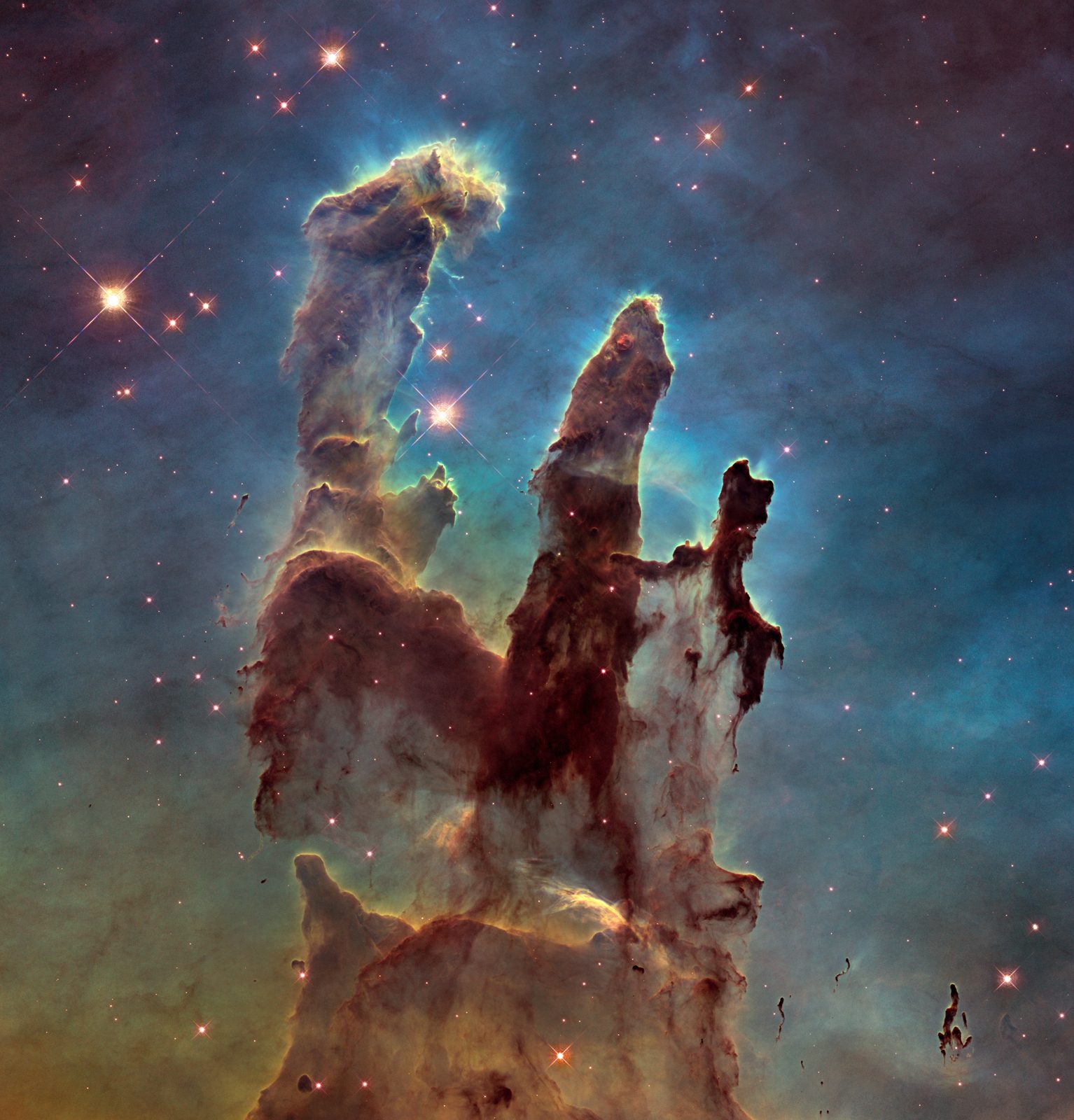
Hubble · 2014
Webb · 2022
Hubble: NASA / ESA. Webb: NASA / ESA / CSA / STScI. Official stills, not a composite guess.
Empty sky · 1995 · 2014 · 2022
Hubble Deep Field, Ultra Deep Field, then Webb. Same idea: a dark patch, a long look. The universe filled in.
Pillars of Creation · 1995 · 2014 · 2022
The original WFPC2 mosaic, Hubble’s 2014 revisit, then Webb infrared. The clouds did not change. The cameras did.
Hubble · still flying
Launched 24 April 1990 · last crew May 2009
36 years aloft
Designed for fifteen. Last shuttle visit: STS-125, Atlantis. There is no crew to go back.
Gyros
One gyroscope in the loop since June 2024. One spare powered. NASA’s 2024 briefing: better than 70% chance of at least one gyro through 2035.
Orbit
No reboost. Atmospheric re-entry is currently projected for the mid-2030s. The work is planned until then.
What Webb cannot do
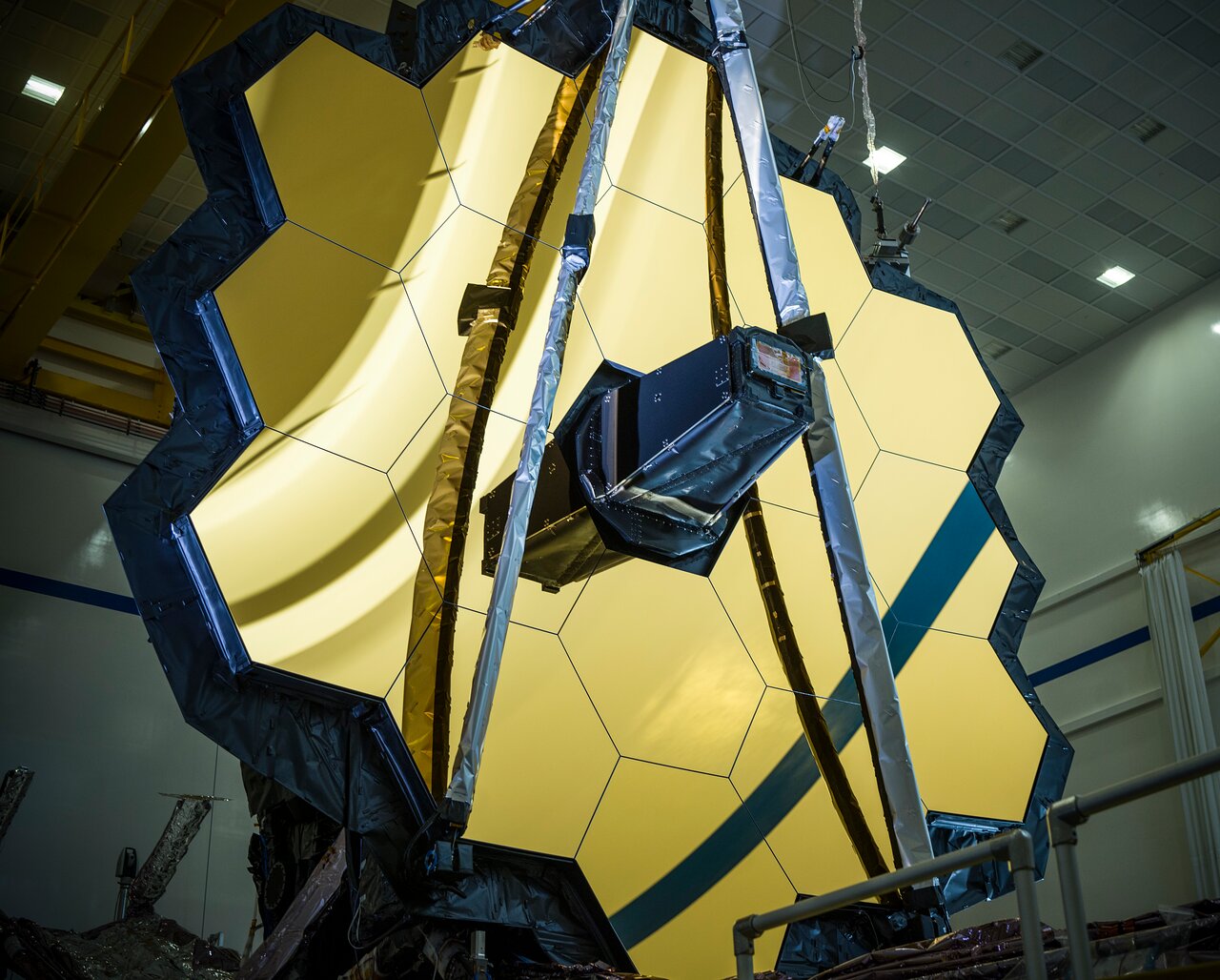
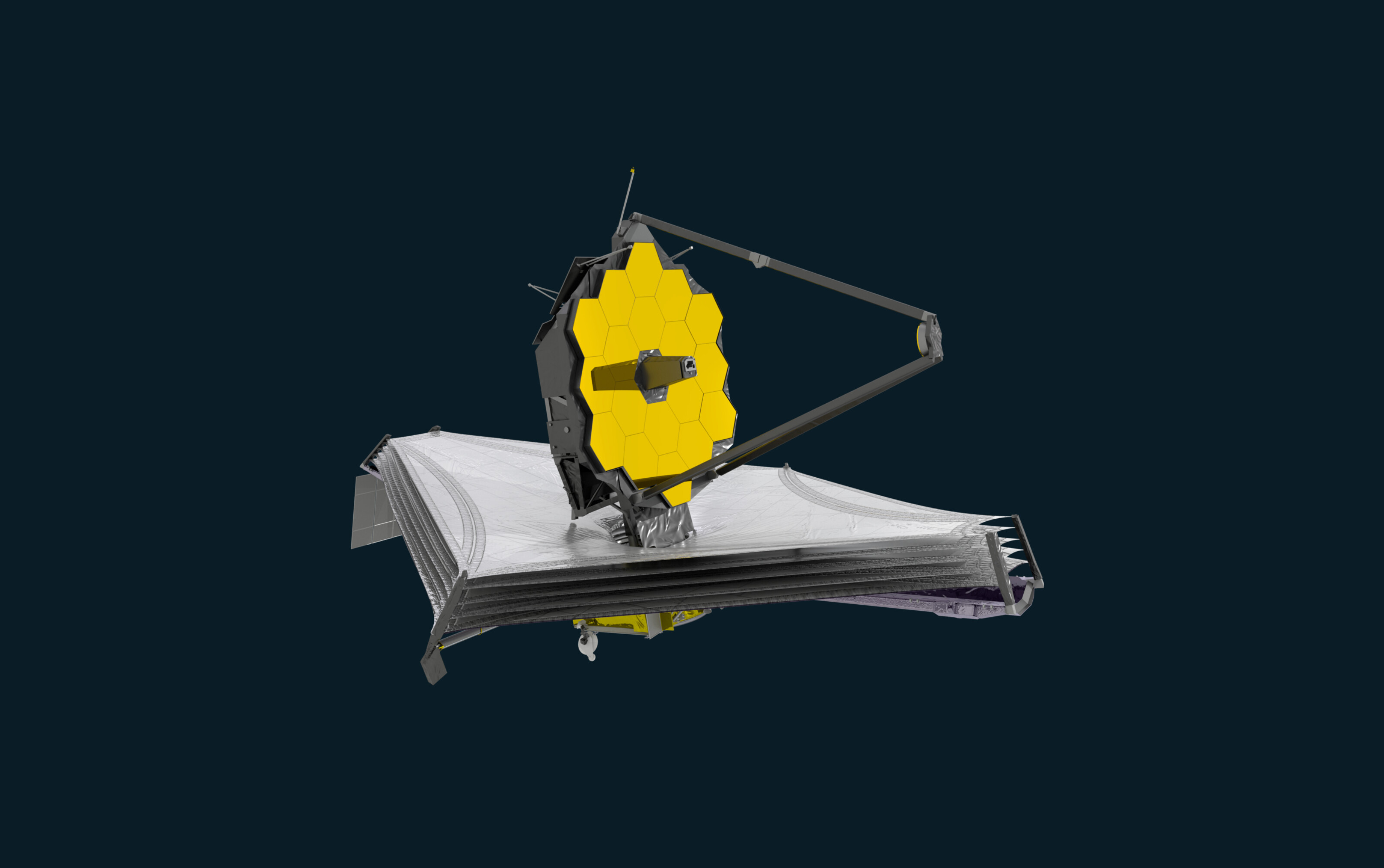
Ultraviolet, and the visible band Hubble was built for. Webb is infrared, at L2. They are not the same machine. Cycle 34 starts 1 November 2026.
Mars · sample return
Inventory as of 2025-07-24 · watch stamped Tue Sep 15
33 / 43
tubes filled. 10 left at Three Forks as a backup cache.
No approved return. Congress ended the Mars Sample Return line in January 2026.
Perseverance is still drilling in Jezero. Thirty-three tubes filled, including rock, soil, air, and witness blanks. Ten sit at Three Forks as a backup cache. The rest ride with the rover. Cheyava Falls — a rock with a possible biosignature — is in that haul. The samples are real. The ride home is not on the books.
Sonification · official NASA audio
Webb data, translated by Chandra’s sonification desk. Built first for listeners who cannot see the still. It stays on Night Ledger.
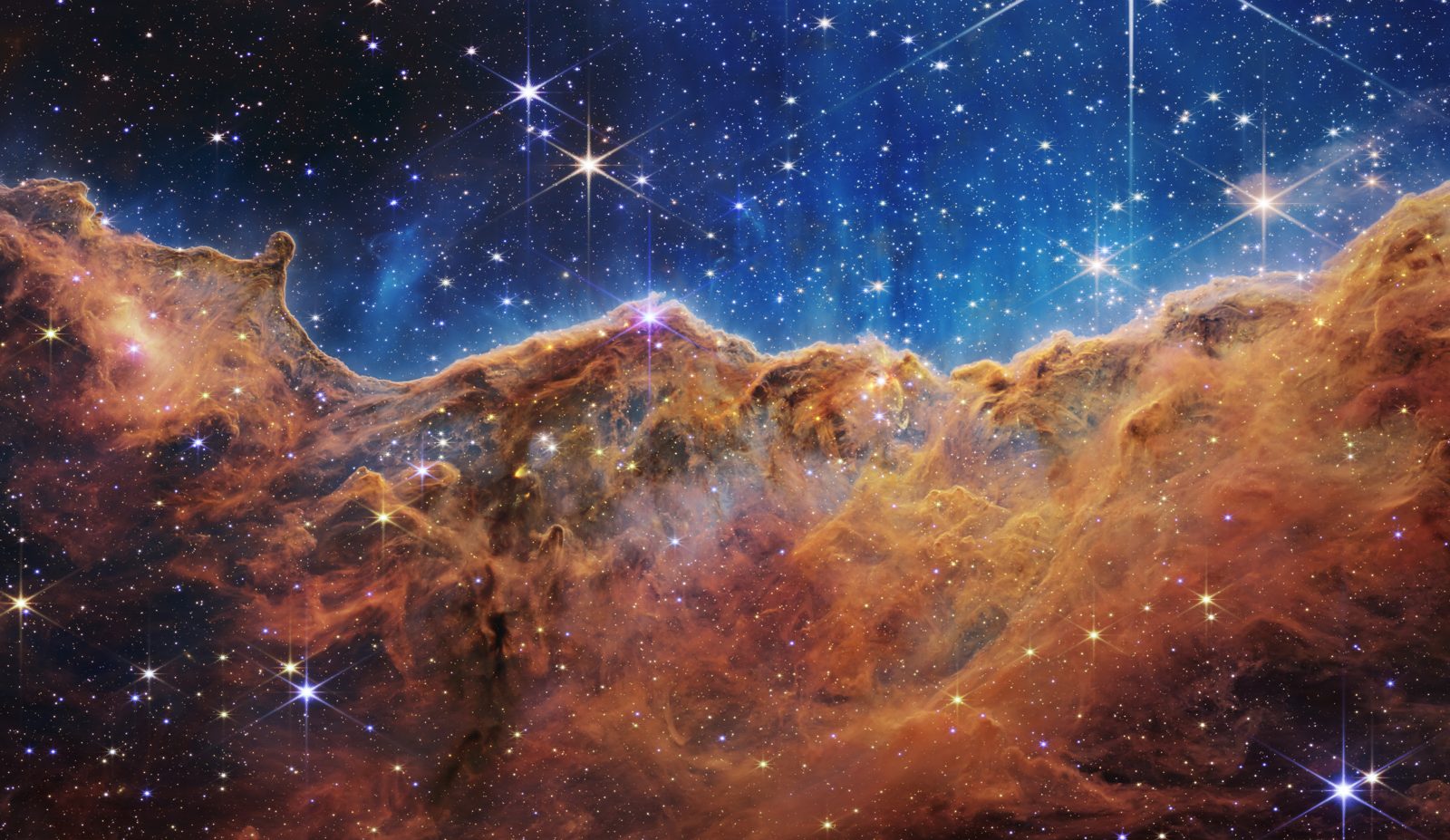
Cosmic Cliffs — Carina
NASA / ESA / CSA / STScI / Chandra CXC. Official Webb sonification.
Infrared data, left to right, turned into pitch. Brighter is louder. A picture you can hear.
Southern Ring Nebula
NASA / ESA / CSA / STScI / Chandra CXC. Official Webb sonification.
A dying star’s shells. Near-infrared and mid-infrared, as sound.
WASP-96 b — the air of another world
NASA / ESA / CSA / STScI / Chandra CXC. Transmission spectrum as notes.
Not a photograph of the planet. A spectrum of its air, played. Water, haze, heat — as notes.
How far · tap a stop
Each stop is how long light takes. Not a rocket. A photon, going the speed we cannot beat.
Light-time · here
The only world with a public sample of life. Everything else on this desk is a photograph, a radio, or a rock we went and got.
Film · plays here
1969 · Apollo 11 — walking on the Moon
NASA. Official restored EVA film.
Original tape · original language kept
The only world besides Earth that people have stood on. Last crew: Apollo 17, 1972.
1990– · Hubble — a telescope that kept working
NASA Goddard. Official overview.
Original tape · original language kept
Serviced in orbit five times. Expansion of the universe, dark energy, and thousands of papers rest on this machine.
2021 · Perseverance — landing on Mars
NASA / JPL-Caltech. Cameras on the descent.
Original tape · original language kept
Jezero Crater. The rover is caching rock for a future sample return. Looking for past life, not a verdict yet.
2021–24 · Ingenuity — 72 flights on Mars
NASA / JPL-Caltech. Official map film.
Original tape · original language kept
First powered, controlled flight on another world. Meant for five hops. It flew for three years.
2022 · Webb — first color images
NASA. Official first-images film of the James Webb Space Telescope.
Original tape · original language kept
Infrared. Early galaxies, star nurseries, and the air of other worlds. The current deep look.
2024 · Europa Clipper — toward an ocean moon
NASA / JPL-Caltech. Mission overview.
Original tape · original language kept
Launched 14 October 2024. Jupiter in 2030. Forty-nine flybys of an ice shell that may hide an ocean.
2026 · Artemis II — around the Moon, and home
NASA. Official film.
Original tape · original language kept
First crew around the Moon since 1972. Splashdown April 2026. Artemis III is next, toward the surface.
2026 · A Moon base — the first six months, as planned
NASA. Official film.
Original tape · original language kept
Not a landing. A public sketch of how a crew would live there. The work is still ahead of the hardware.
Pictures · tap to open
Research · then and now
1609–10 · Then
Galileo turned a spyglass on Jupiter and found four moons. The sky was no longer a painted dome. The method — look, write, let others look — is still the method.
1929 · Then
Edwin Hubble measured galaxies receding. Space itself stretches. That finding, later sharpened, is why we can talk about a beginning at all.
1969 · Then
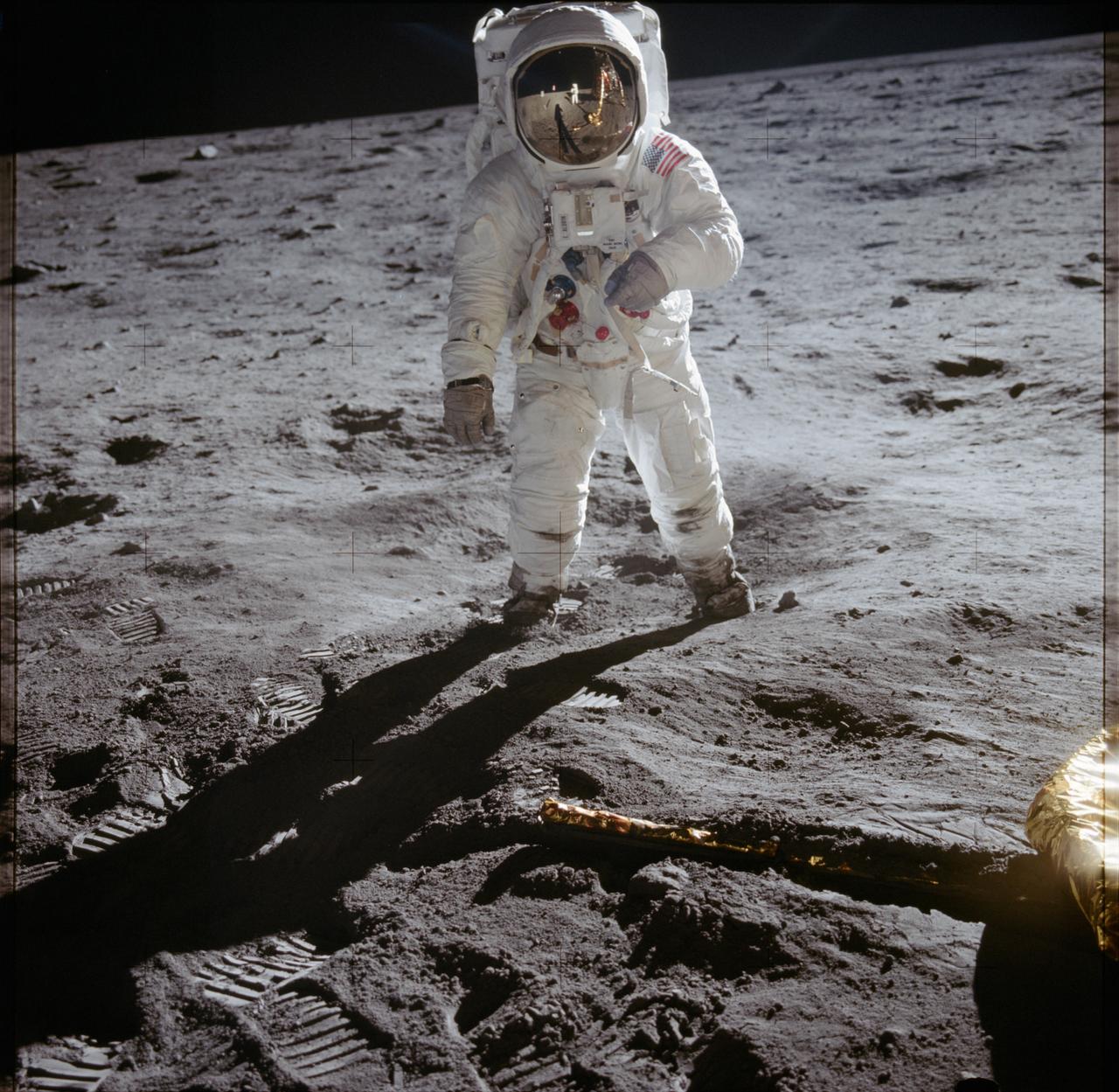
Apollo 11. Rocks came home. They are in labs. Twelve walked. None have been back since 1972.
1977–90 · Then
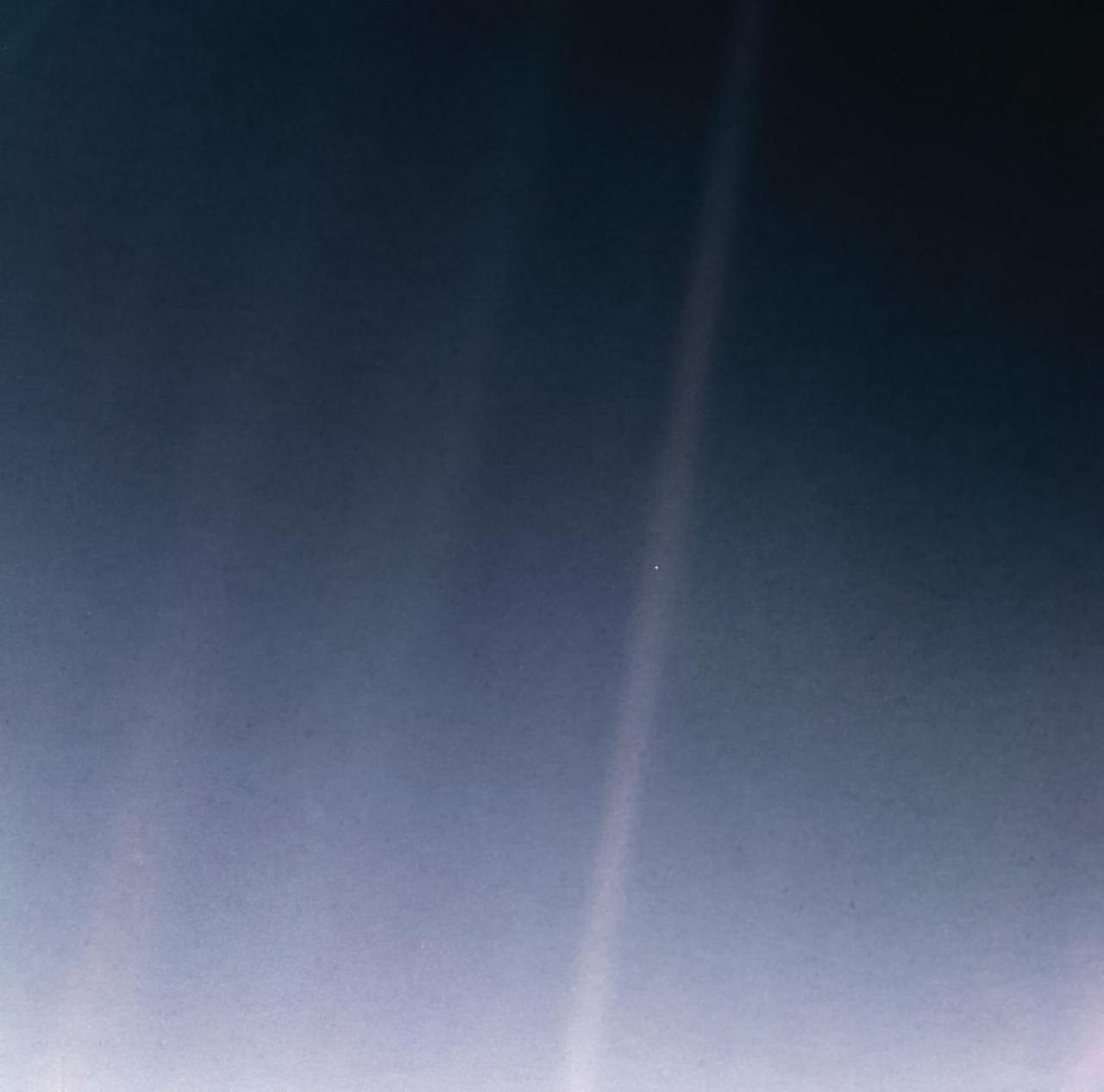
Voyager 1 and 2 flew the outer planets. In 1990 the camera turned around for the Pale Blue Dot, then shut. Both craft are now in interstellar space, still calling, faintly.
1990 · Then
Hubble launched with a flawed mirror, was corrected in orbit, and became the public eye. Deep fields, Pillars of Creation, accelerating expansion.
1995 · Then
51 Pegasi b. Then Kepler, TESS, and thousands of confirmed planets. Other systems are common. A census of worlds is not a census of life.
2015 · Now
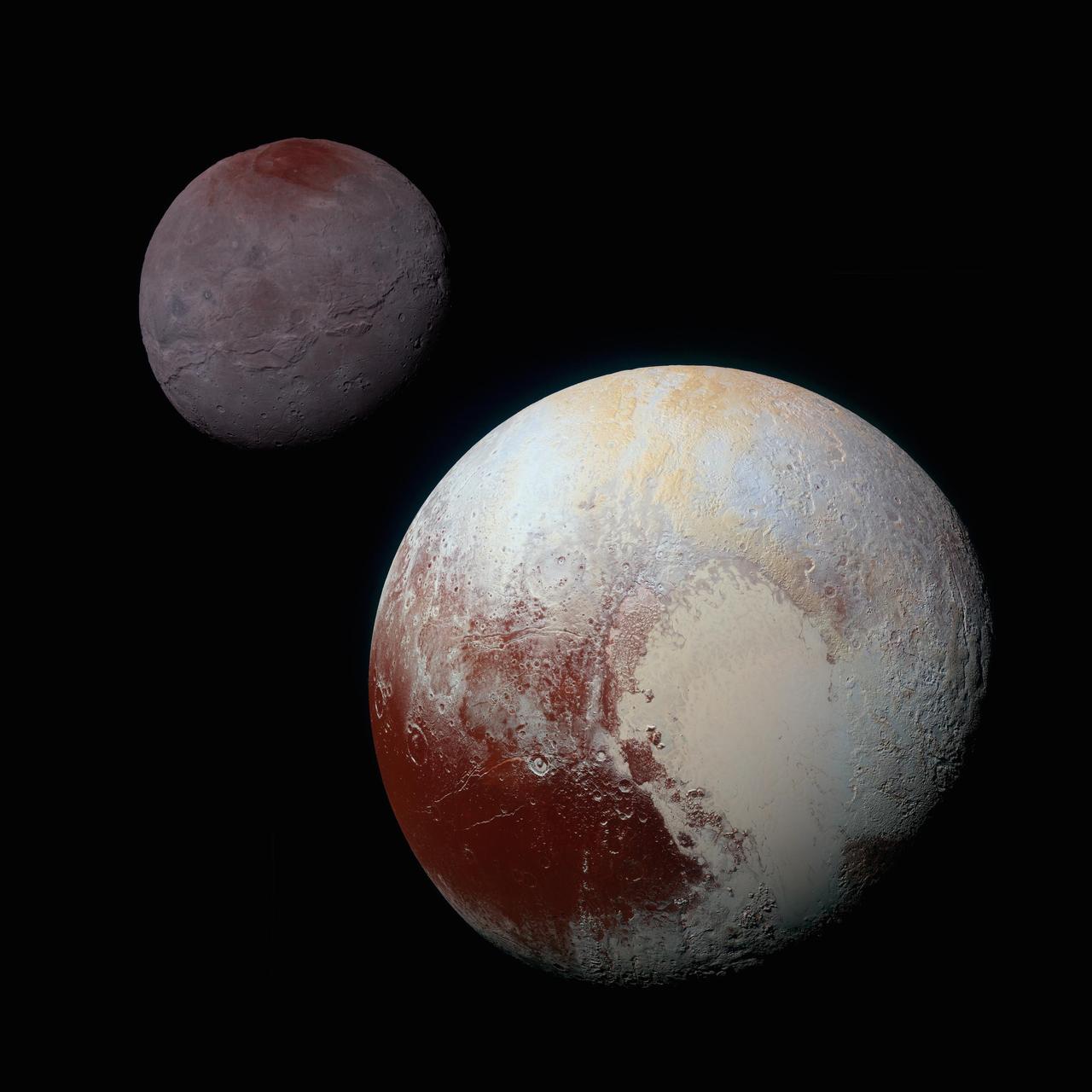
New Horizons flew past Pluto and Charon. Mountains of ice, a nitrogen heart, a haze. Then it kept going, into the Kuiper belt.
2015 · Now
LIGO heard two black holes merge. Gravity is a wave we can measure. The universe is not only light.
2016– · Now
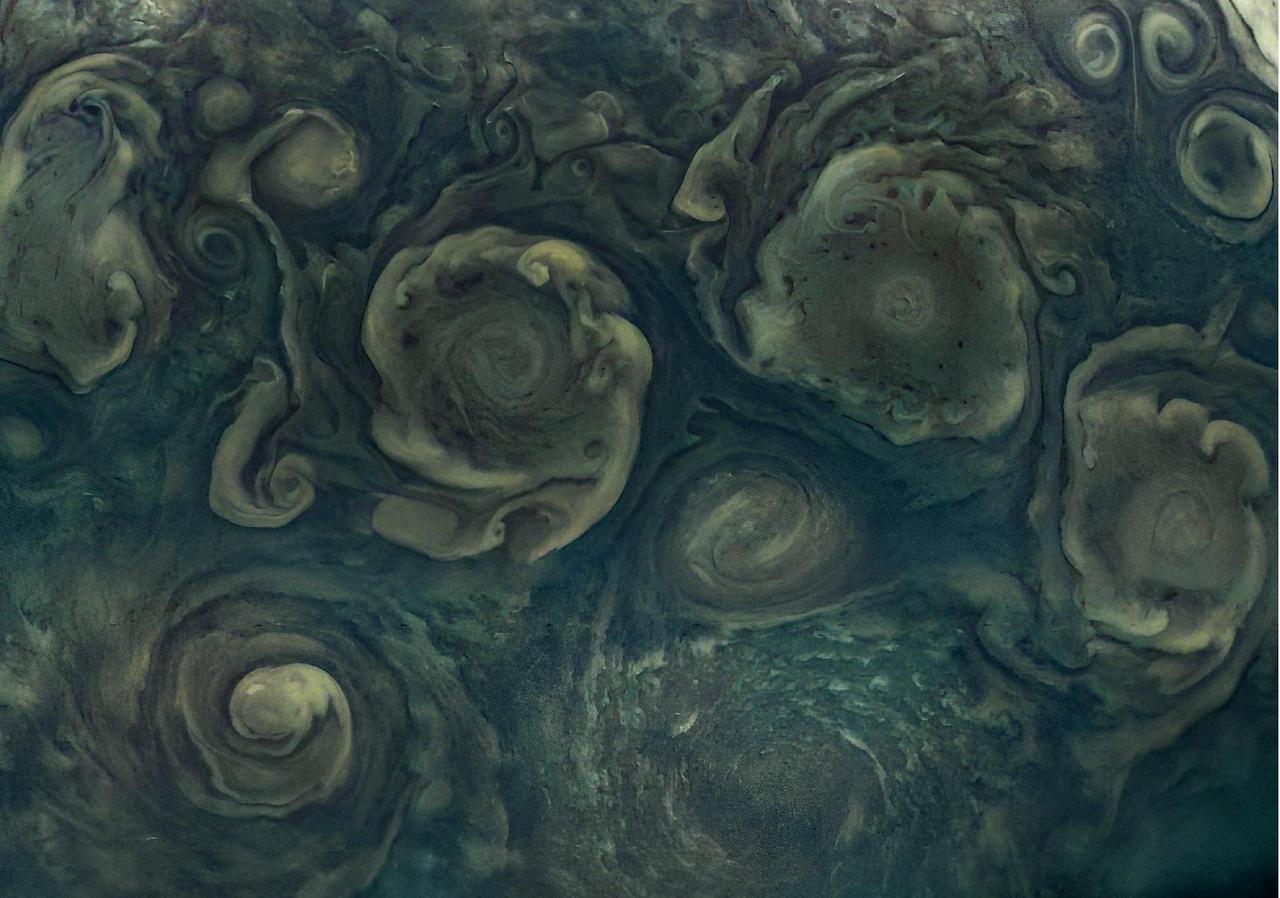
A polar orbiter at Jupiter. Cyclones in polygons. A core that is not a simple ball of rock. Still in flight.
2019 · Now
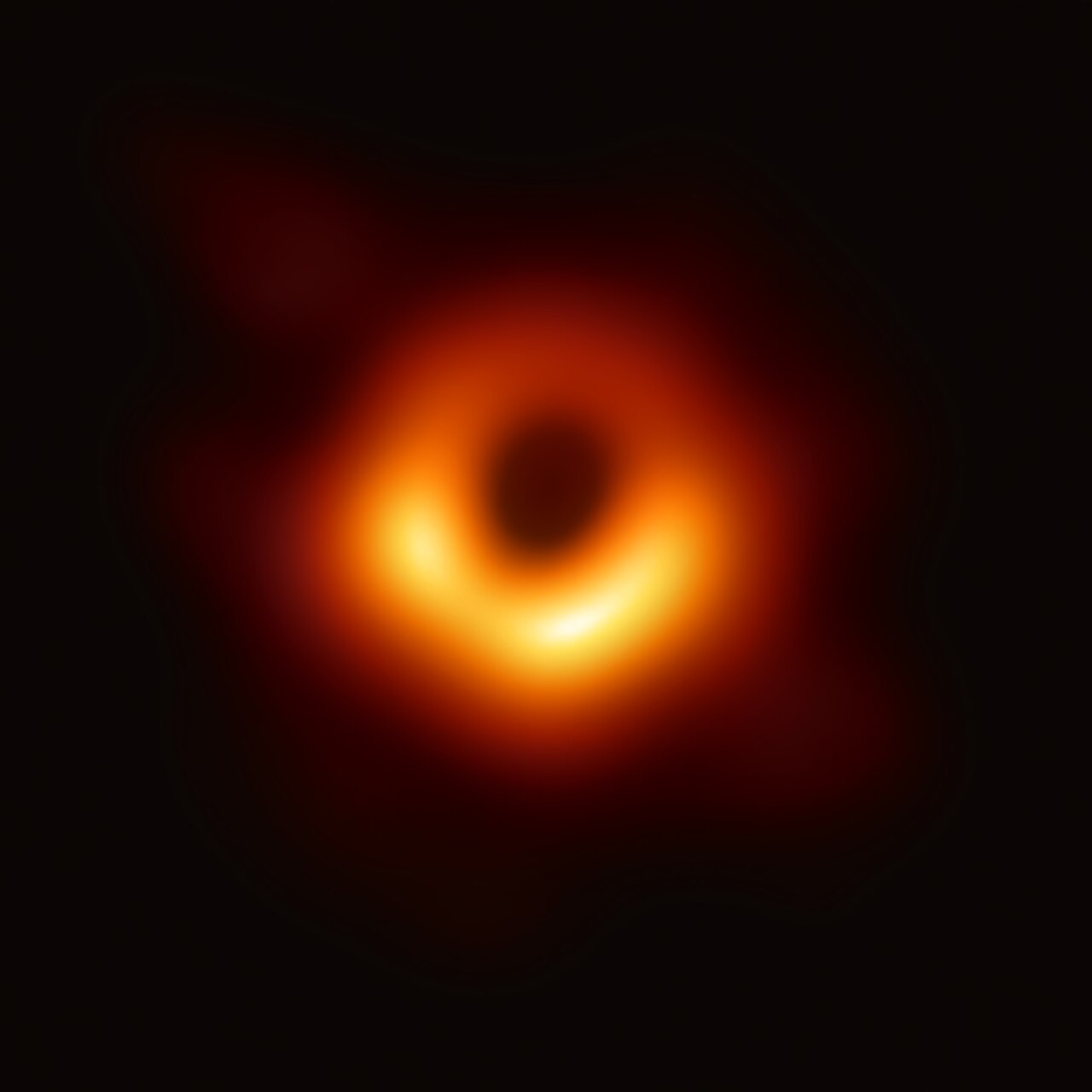
The Event Horizon Telescope imaged M87*. In 2022, Sagittarius A* at the center of our own galaxy. Mass, not myth.
2021– · Now
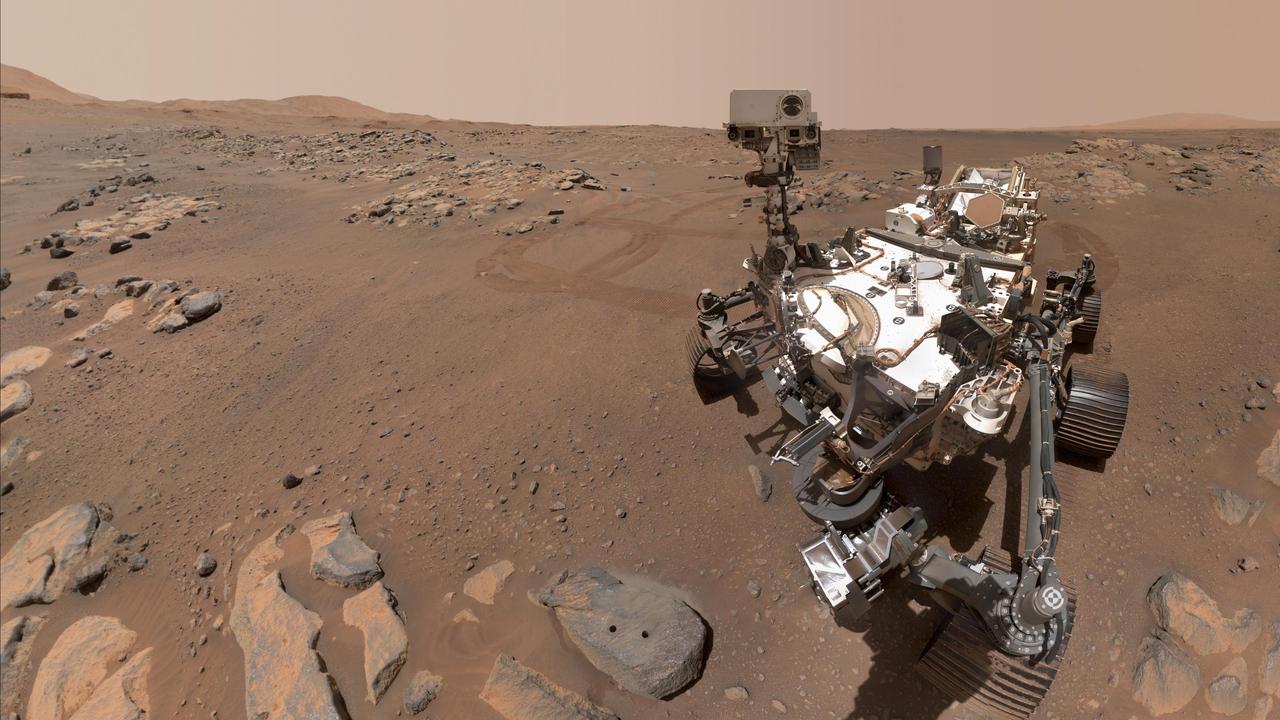
Perseverance is collecting cores in Jezero Crater. Ingenuity proved flight in thin air — 72 hops. Thirty-three tubes are filled. Sample return has no approved mission after January 2026. The rocks wait.
2022– · Now
JWST is seeing galaxies earlier than models liked, and carbon dioxide in exoplanet air. No agreed biosignature. No photographed craft.
2024–30 · Now
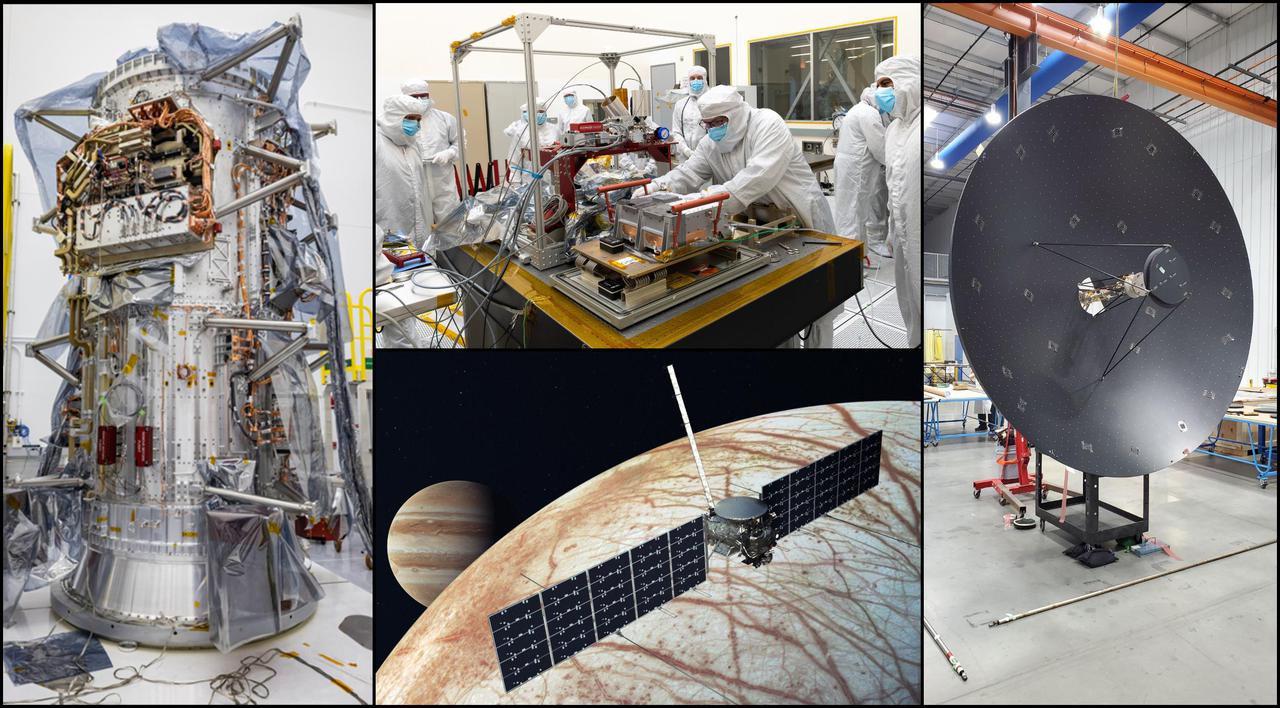
Europa Clipper is in flight. It will not land. It will smell the ice from flybys and ask whether that ocean could hold life. Answer after 2030.
2026– · Now
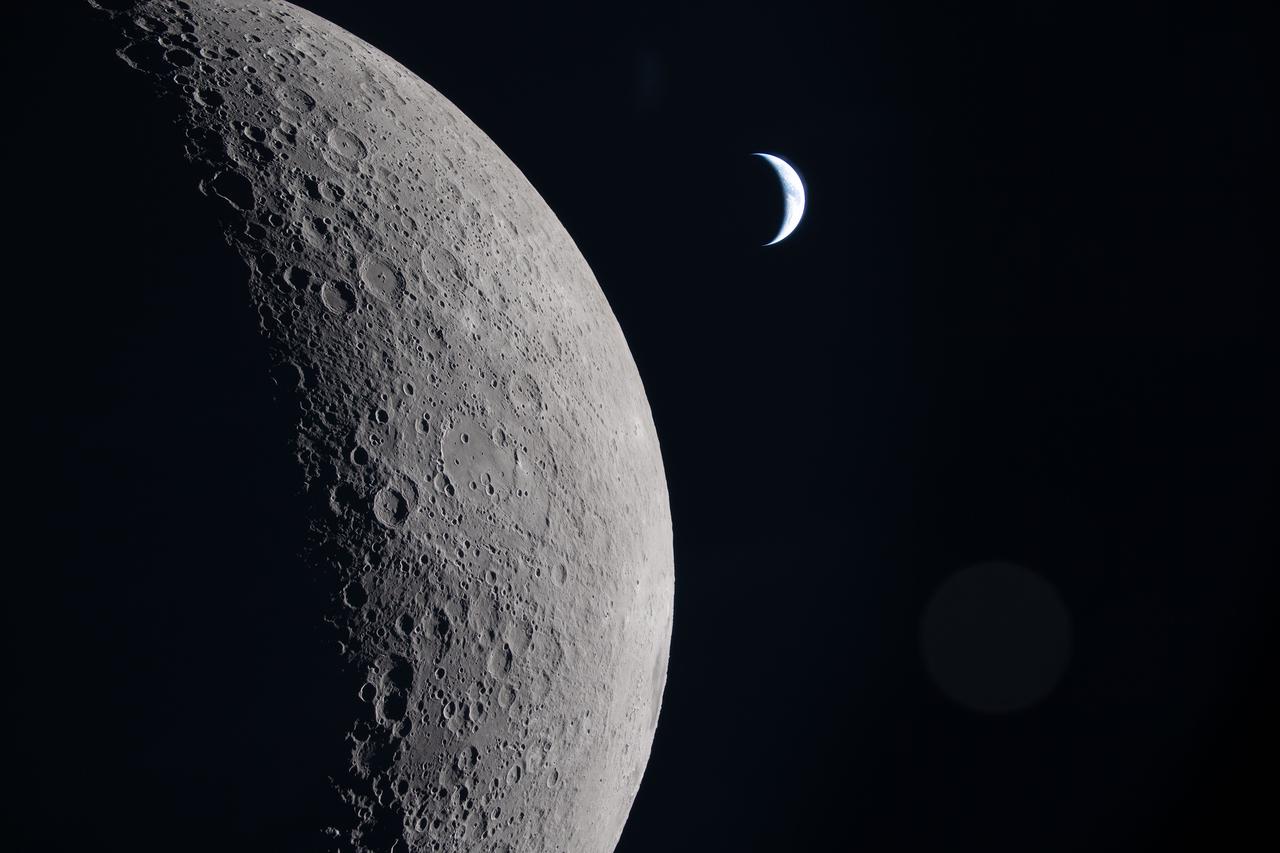
Artemis II flew around the Moon in April 2026 and came home. Artemis III is aimed at the surface. A base is a plan, not a building.
2026– · Now
The Nancy Grace Roman Space Telescope is in public briefings this year. A wide eye, after Hubble’s narrow one. Built to count dark energy and other worlds in bulk.
Where we are
People have stood on one other world. They have not gone back since 1972. A crew went around the Moon again in 2026. Low Earth orbit has been occupied, without a gap, since 2000.
Robots have visited every planet in this system. Samples from the Moon are in drawers. Mars rock is waiting in tubes. Nothing public is a piece of another star.
Thousands of exoplanets are confirmed. A handful of atmospheres have been read. No signal from SETI has been decoded. No biosignature has survived the first hard reading.
We have weighed dark matter by its pull and named dark energy by the stretch. We have not identified either. The inventory of the universe is still mostly unlabeled mass.
That is the standing of the research. The unidentified files on this wiki are a different desk. This one is the sky we can already teach.